JConnelly Insights
The Focus Narrows in on Quality Content − as SEO Tricks Dwindle
Updates to Google’s algorithms over the past few months have impacted search engine optimization.
While there are still several best practices for SEO, businesses with subpar content can no longer “trick the system” as increasingly smart algorithms are programmed to find high-quality content.
Google’s Factors of Quality Content 
From a search engine standpoint, Econsultancy has determined five factors that indicate high quality content:
- Holistic content
- Length of text on the page
- Readability of copy on the page
- Less advertising on the page
- The presence of images
Finally! Putting the user first means you’ll always be ahead of algorithm modifications.
With the semantics Google builds around industries and topics, well-written, accessible and comprehensive content that is relevant for users with different search intentions takes priority. Holistic content tends to yield more text per page, which is reflected in the rising average length of top ranking search results. A good user experience uninterrupted by ads and accompanied by images boosts Google’s ranking of your content (which is also a bit of irony for those invested in Google ad buys).
Frequent and consistent content helps companies:
- Build an audience
- Develop a sense of authority and expertise in certain topics
- Rank highly in search engine results
Top tip? Avoid being overly promotional and focus on providing great advice and information that will make a user want to use your services.
The Convergence of SEO and Content Marketing
Marketing has gone soft, so don’t be afraid to give away knowledge in your posts. In addition to acquiring a following, content marketing will build brand awareness and communicate value to prospects. Due to the weight SEO places on quality content, having a blog on your website has become more of a necessity than an option.
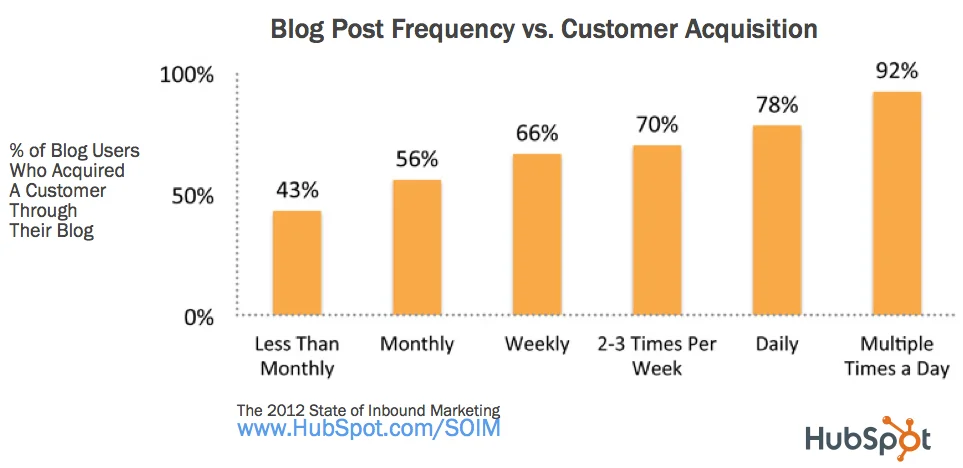 According to HubSpot, companies that blog receive 55 percent more website traffic and B2Cs that blog receive 88 percent more leads, compared to those that don’t. Frequency of blog posts also affects customer acquisition:
A content marketing strategy that pushes posts frequently enough to engage users but not too frequent so as to diminish its quality strengthens SEO. The following statistics from Matthew Capala’s “SEO Like I’m 5” highlight the importance of showing up in search results:
- 80 percent of consumers search for a product/service before purchasing it
- 70 percent read online reviews before making purchase decisions
- 68 percent of consumers begin their decision-making while searching for a keyword
When in doubt with SEO best practices, write for people rather than for robots. Google’s algorithms increasingly analyze the relevance and quality of content like humans.